

Send Message
Privacy statement: Your privacy is very important to Us. Our company promises not to disclose your personal information to any external company with out your explicit permission.
Select Language


Comprehensive Verification of Intelligent Wearing Micro Screws Amidst Multiple Factors
As a core component of metal forming equipment, the performance of Intelligent Wearing Micro Screws directly determines product precision and production efficiency. In practical applications, Intelligent Wearing Micro Screws often face complex operating conditions such as alternating high and low temperatures, damp heat corrosion, heavy-load impact, and dust abrasion. Environmental adaptability testing is a crucial means of evaluating the reliability of Intelligent Wearing Micro Screws and...

Wear Resistance and Sealing Performance Testing of Intelligent Wearing Micro Screws
Operating Conditions: Dust and metal shavings from metalworking workshops can easily enter the gaps of Intelligent Wearing Micro Screws, leading to surface wear and decreased fit accuracy, especially significantly affecting the cutting edges of stretching dies. Test Methods: Abrasive wear test. Quartz sand (0.1~0.5mm particle size) is added to the surface of the Intelligent Wearing Micro Screws to simulate a friction environment. Wear amount (weight loss method) and roughness change are...

Fatigue Life and Structural Strength Verification of Intelligent Wearing Micro Screws
Operating Conditions: In continuous stamping production lines, Intelligent Wearing Micro Screws are subjected to repeated tensile loads and impacts (e.g., stamping frequency of 1000 cycles/min), making them prone to fatigue fracture and localized deformation. Test Methods: A fatigue testing bench was used to simulate actual loads (e.g., 100kN alternating tensile force) for up to 10⁶ cycles, monitoring crack propagation in stress concentration areas of the Intelligent Wearing Micro...

Rust Resistance and Precision Retention Capability Testing for Intelligent Wearing Micro Screws
Operating Conditions: In coastal areas or humid workshops, Intelligent Wearing Micro Screws are susceptible to salt spray and moisture corrosion, leading to surface rust and decreased precision, especially affecting carbon steel Intelligent Wearing Micro Screws. Salt Spray Test: Following GB/T10125 standard, continuous spraying at 35℃ and 5% NaCl solution for 240 hours; Damp Heat Cycling Test: Cycled 10 times (24 hours each time) at 40℃/90%RH. Evaluation Indicators: Surface corrosion area...

Thermal Stability and Fatigue Resistance Verification of Intelligent Wearing Micro Screws
Operating Conditions: In scenarios such as automotive hot stamping and aerospace component forming, Intelligent Wearing Micro Screws must withstand repeated temperature cycles from -40℃ (low-temperature storage) to 300℃ (hot stamping). Thermal expansion and contraction easily lead to material fatigue cracks and dimensional deformation. Test Methods: A high-low temperature alternating test chamber is used to simulate temperature cycles (e.g., -40℃/1h → heating to 300℃/2h → cooling to room...

Optimization and Rational Storage Methods for Intelligent Wearing Micro Screws
In modern industrial production, Intelligent Wearing Micro Screws serve as crucial production tools, and their performance directly impacts product quality and production efficiency. Rational mold storage not only extends mold lifespan but also reduces maintenance costs and improves production efficiency. 1. Intelligent Wearing Micro Screws Rusting Causes: Excessive humidity in the storage environment or insufficient rust prevention measures. Solutions: Improve the storage environment, use...
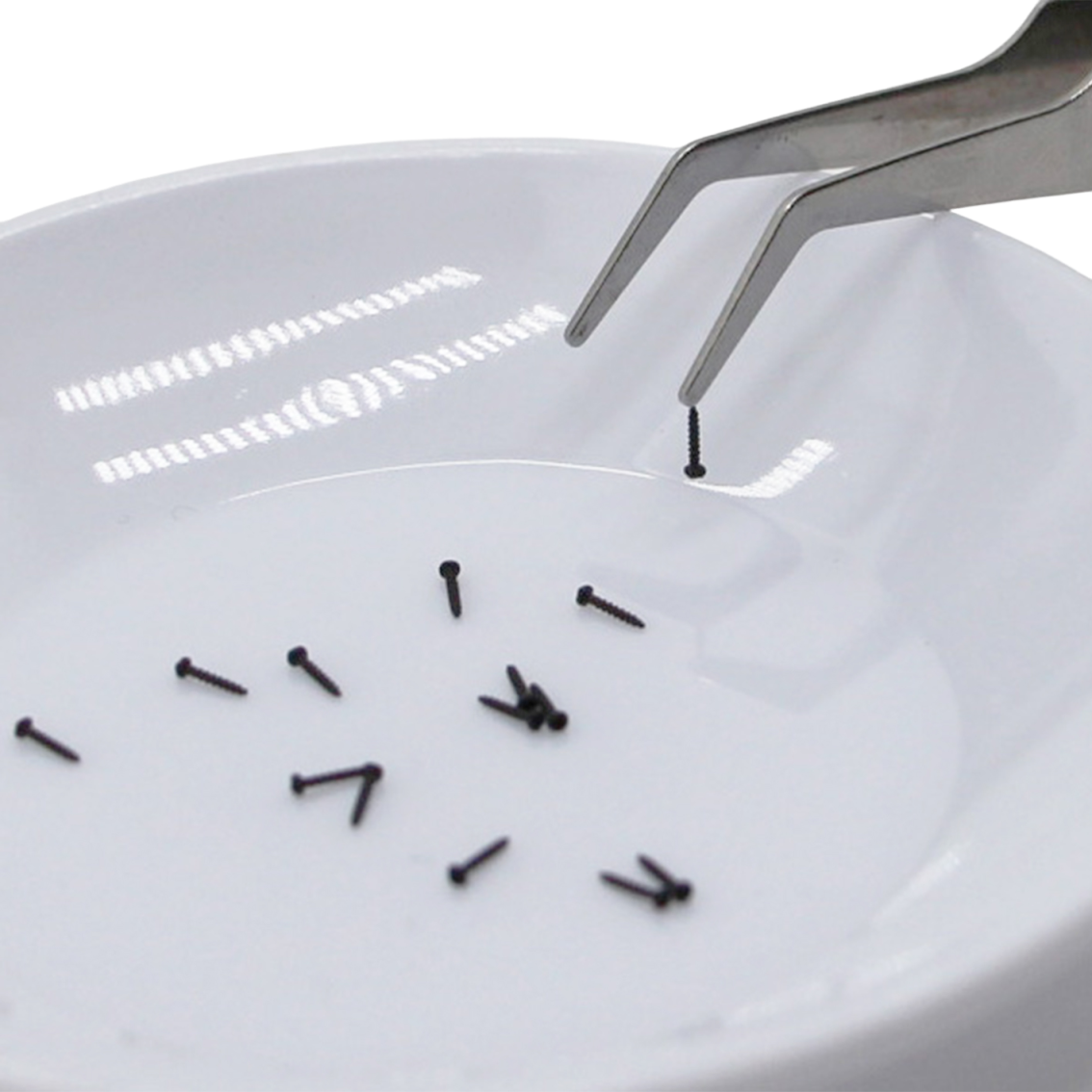
Intelligent Wearing Micro Screws Storage Environment Requirements
1. Temperature and Humidity Control The ideal storage environment temperature should be maintained between 15-25℃, and the relative humidity between 45%-55%. Excessive humidity can easily cause Intelligent Wearing Micro Screws to rust, while excessive dryness may cause some sealing materials to age. It is recommended to equip the storage area with temperature and humidity monitoring equipment, and use dehumidifiers or air conditioners to regulate the environment when necessary. 2. Dust and...

The Importance of Intelligent Wearing Micro Screws Storage
1. Extending Intelligent Wearing Micro Screws Lifespan Scientific and proper storage methods can effectively prevent corrosion, deformation, and mechanical damage to Intelligent Wearing Micro Screws during non-use periods. If the surface of an Intelligent Wearing Micro Screws is exposed to a humid environment for a long time, it is prone to rust, seriously affecting its subsequent performance. By optimizing the storage environment and methods, the lifespan of Intelligent Wearing Micro Screws...

Intelligent Wearing Micro Screws have become an important tool for springback anti-rebound design: 1. Springback Prediction: Simulating the entire forming process using finite element analysis software to predict the amount of springback. 2. Parameter Optimization: Analyzing the influence of various factors on springback using the DOE method. 3. Virtual Molding: Completing Intelligent Wearing Micro Screws debugging on a computer, reducing the number of actual molding trials. 4. Compensation...

Anti-springback Design Methods for Intelligent Wearing Micro Screws
(I) Intelligent Wearing Micro Screws Surface Compensation Design A direct anti-springback method is to offset the expected springback amount through pre-compensation of the Intelligent Wearing Micro Screws's surface. The design requires: 1. Predicting the direction and magnitude of springback through finite element analysis or empirical data. 2. Reverse correction of the Intelligent Wearing Micro Screws's working surface. 3. Adopting an adjustable Intelligent Wearing Micro Screws structure for...

The Formation Mechanism of Springback in Medical Equipment Micro Screws
When metallic materials deform under stress, Medical Equipment Micro Screws undergo both elastic and plastic deformation simultaneously. After the external force is removed, the elastically deformed portion recovers, while the plastically deformed portion remains. This elastic recovery is the essence of the springback phenomenon. The amount of springback in an Medical Equipment Micro Screws depends on the material's elastic modulus, yield strength, and stress distribution during the forming...

Medical Equipment Micro Screws Failure Analysis and Root Cause Identification
Medical Equipment Micro Screws are core equipment in the field of metal plastic forming, widely used in the production of automotive body panels, appliance housings, and aerospace components. Their performance directly determines workpiece precision, surface quality, and production efficiency. However, during long-term service, molds often fail due to wear, fracture, deformation, and other failure modes, leading to production interruptions and increased manufacturing costs. Medical Equipment...

Scientific Methods for Finding the Causes of Medical Equipment Micro Screws Failures
Accurately identifying the causes of failure requires a multi-dimensional analysis. The key steps are as follows: 1. Macroscopic Morphology Analysis First, observe the appearance of the failed Medical Equipment Micro Screws, recording the failure location (e.g., cutting edges, fillets, cavities) and failure mode (wear, cracks, deformation). For example: The direction of wear marks can determine the direction of friction; The initiation point and direction of cracks can infer the location of...

Common Failure Types and Core Causes of Medical Equipment Micro Screws
Medical Equipment Micro Screws exhibit diverse failure modes, each with different root causes. The main types include the following five categories: 1. Wear Failure Wear is a common failure mode, characterized by the gradual loss of material from the working surfaces of the die (e.g., punch cutting edge, die cavity), leading to decreased dimensional accuracy and scratches or burrs on the workpiece surface. Severe Friction Conditions: During the stretching process, the relative sliding between...

Strategies and Practices for Reducing the Environmental Impact of Medical Equipment Micro Screws
In today's rapidly developing manufacturing industry, Medical Equipment Micro Screws, as a key tool in metal forming processes, are widely used in various industries such as automobiles, home appliances, and electronics. However, the production and use of traditional Medical Equipment Micro Screws are often accompanied by problems such as resource consumption, energy waste, and environmental pollution. With the increasing global awareness of environmental protection and the deepening of the...

Future Development Trends and Challenges of Medical Equipment Micro Screws
1. New Materials and Technologies: Cutting-edge technologies such as biodegradable Medical Equipment Micro Screws materials, self-healing materials, and nanocomposite materials will drive breakthroughs in the environmental performance of Medical Equipment Micro Screws; AI-assisted design will optimize the environmental performance of Medical Equipment Micro Screws. 2. Circular Economy Model: New business models such as Medical Equipment Micro Screws sharing platforms and Product Service Systems...

Economic Benefits Analysis of Environmental Optimization for Medical Equipment Micro Screws
1. Direct Cost Savings Material savings in Medical Equipment Micro Screws can reduce raw material costs by 10-20%; improved energy efficiency leads to a 15-30% reduction in energy costs. Waste disposal costs are reduced by over 50%; environmentally friendly processes are often accompanied by increased production efficiency, further reducing costs. 2. Increased Indirect BenefitsAn enhanced environmental image for Medical Equipment Micro Screws brings brand premium and market opportunities;...

Medical Equipment Micro Screws Production Management and System Optimization Strategies
1. Application of Life Cycle Assessment (LCA) Methodology Establish a life cycle environmental impact assessment system for Medical Equipment Micro Screws, from raw material acquisition to end-of-life disposal, identify key pollution points, and implement targeted improvement measures. LCA can quantify the effects of environmental optimization and guide decision-making. 2. Cleaner Production System Construction Implement the ISO 14001 environmental management system and establish clean...

Technological Pathways for Environmental Optimization of Medical Equipment Micro Screws
1. Material Selection and Lightweight Design Using high-strength, high-wear-resistant environmentally friendly materials can reduce the size and weight of Medical Equipment Micro Screws while extending their service life. For example, using new powder metallurgy steel can improve material performance by 20-30% and reduce material consumption. Topology optimization and finite element analysis techniques can achieve lightweighting of Medical Equipment Micro Screws structures, reducing material...

Major Environmental Issues in Medical Equipment Micro Screws Production:
1. Material Consumption and Waste: Traditional Medical Equipment Micro Screws manufacturing typically uses large amounts of steel and other alloy materials, resulting in low material utilization and a high proportion of chips and waste generated during processing. Statistics show that the material utilization rate of some complex molds is even less than 50%, which not only wastes resources but also increases the pressure of waste disposal. 2. Energy Consumption and Carbon Emissions: Medical...

Key Practical Considerations for Medical Equipment Micro Screws Design
The matching of rib width and groove width is equally important: rib width should be 2-4 times the material thickness, and groove width slightly larger than rib width to avoid material jamming. Rib width that is too small can easily cause localized compression deformation, while width that is too large will disperse resistance and fail to effectively control flow. The position and arrangement of draw beads must conform to the characteristics of the part: material accumulation is prone to occur...

The Control Principle of Material Flow in Medical Equipment Micro Screws Draw Bead Design
In Medical Equipment Micro Screws, draw beads are the core structure for controlling material flow and ensuring part forming quality. Essentially, they are raised components placed in the die flange area. Artificially increasing material flow resistance coordinates the feed speed in different areas and solves common defects such as wrinkling, cracking, and surface distortion during the drawing process of complex curved parts. It is a key aspect of the drawing process design. Common draw beads...

The Application Value and Industry Significance of Medical Equipment Micro Screws
Parametric design offers significant value in rapidly adjusting specifications: Efficiency Improvement: Adjustments to Medical Equipment Micro Screws that traditionally require 1-2 weeks can be completed in just a few hours with parametric design, improving efficiency by over 80%. Cost Reduction: Reduces the number of trial moldings and human error, lowering manufacturing costs for Medical Equipment Micro Screws. Fast Market Response: In multi-variety, small-batch production scenarios, it can...

Key Technologies and Applications of Medical Equipment Micro Screws
1. Scientific Verification of Parameter Rules Electronic vehicle parameter rules need to be verified for rationality using finite element simulation technology. For example, after adjusting specifications, the stretching process can be simulated to check for defects such as cracking and wrinkling, thereby optimizing parameters (e.g., increasing the die fillet radius or adjusting the blank holder force). 2. Knowledge Accumulation and Reuse Engineers' experience should be transformed into a...
About Us
Contact Us

Privacy statement: Your privacy is very important to Us. Our company promises not to disclose your personal information to any external company with out your explicit permission.
Fill in more information so that we can get in touch with you faster
Privacy statement: Your privacy is very important to Us. Our company promises not to disclose your personal information to any external company with out your explicit permission.