

Send Message
Privacy statement: Your privacy is very important to Us. Our company promises not to disclose your personal information to any external company with out your explicit permission.
Select Language


Many factors influence the price of Auto Parts Micro Screws
When purchasing an Auto Parts Micro Screws, customers are eager to know the manufacturer's price quote. However, many Auto Parts Micro Screws manufacturers won't directly disclose the price. Because so many factors influence the price of an Auto Parts Micro Screws, it's normal that there's no uniform price. However, if you want a clearer idea, you might want to review the factors we've covered. Many customers often find seemingly similar Auto Parts Micro Screws with vastly different prices. In...

How can Auto Parts Micro Screws manufacturers better attract customers?
Face the growing number of Auto Parts Micro Screws manufacturers, it's essential for manufacturers to stand out. However, many manufacturers often don't know how to change this situation. Actually, it's simple: focusing on a few key areas can easily attract more customers. Here are some suggestions that we hope will be helpful. Product quality is crucial to gaining customer recognition. Understanding product quality is crucial to delivering positive customer results. However, even low prices...
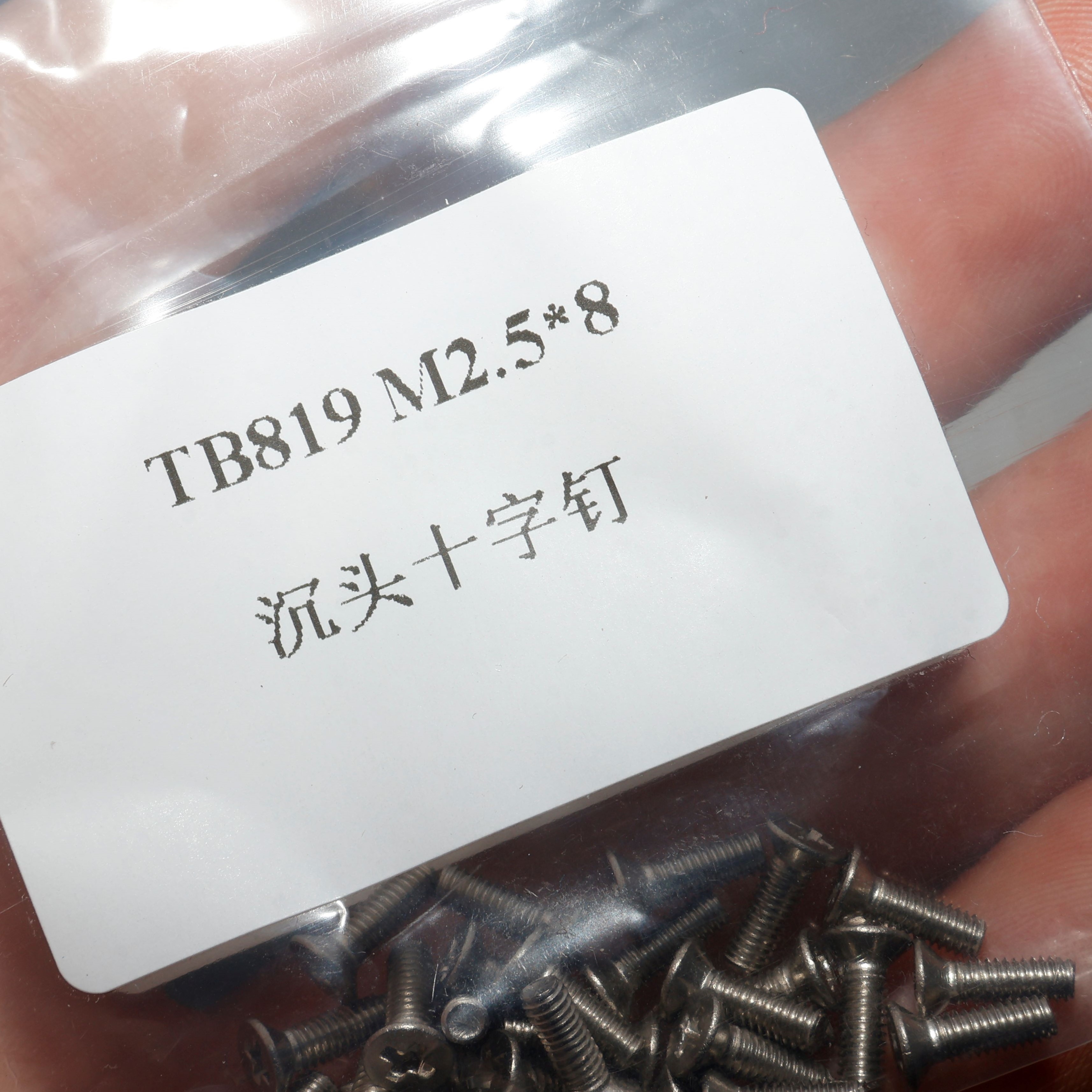
Green recycling closed-loop management of Display Micro Screws and resource regeneration
It is necessary to avoid "throwing away" Display Micro Screws after they are scrapped, and a full life cycle traceability system should be established to realize resource recycling. Metal recycling: After scrapped Display Micro Screws are dismantled, the metal parts are sent to professional recycling companies for smelting and remade into mold steel, with a recovery rate of more than 95%; rare metals (such as tungsten in tungsten steel) are extracted through extraction technology for secondary...

Green Maintenance Extends Display Micro Screws Lifespan and Reduces Scrap
The core of greening the use and maintenance of Display Micro Screws is extending their lifespan and reducing replacement frequency. Preventative Maintenance: Regularly clean the surface of Display Micro Screws. Use bio-based lubricants (such as rapeseed oil-based lubricants) instead of mineral oil to reduce environmental pollution. Predict Display Micro Screws wear using technologies such as vibration monitoring and temperature sensing, and repair in advance to avoid sudden failures. Repair...

Display Micro Screws Require Low-Energy, Zero-Pollution Production Processes
The manufacturing process is a key aspect of green management for Display Micro Screws, requiring a focus on three major pain points: energy consumption, waste, and pollutants. Energy Conservation and Emission Reduction: Promote lean manufacturing and optimize processing techniques (such as merging processes and shortening toolpaths) to reduce unnecessary energy consumption. Adopting an intelligent workshop management system, using the Internet of Things to monitor equipment energy consumption...

Choosing Low-Energy, Low-Pollution "Eco-Partners" for Display Micro Screws
Material selection directly impacts the environmental footprint of Display Micro Screws. First, prioritize recycled materials: such as recycled alloy steel, whose performance is comparable to virgin materials, but with a carbon footprint reduced by approximately 25%, and a price 10%-15% lower. Second, improve material utilization: Employ near-net-shape forming technologies (such as forging and 3D printing) to control the cutting allowance of Display Micro Screws blanks to within 5%, reducing...

Green Design of Display Micro Screws: Controlling Environmental Protection from the Source
With the deepening implementation of the "dual carbon" goals, green transformation in manufacturing has become an industry consensus. As core equipment in stamping and forming, Display Micro Screws are increasingly attracting attention due to resource consumption and pollutant emissions during their production, use, and disposal. Green management, through environmental measures throughout the entire lifecycle of Display Micro Screws, achieves efficient resource utilization, minimizes pollution,...

The Core Logic and Key Measures for Ensuring Precise Motion in Display Micro Screws
Display Micro Screws are core equipment in stamping processes. The motion accuracy of their guiding mechanisms directly determines the alignment of the punch and die, the straightness of movement, and consequently affects the dimensional and positional accuracy, surface quality, and production stability of the drawn parts. If the guiding mechanism has excessive clearance, uneven load, or insufficient precision, it can easily lead to wrinkling, tearing, uneven wall thickness, or even scrapping...

Common Problems and Solutions for Display Micro Screws
1. Insufficient Hardness: Low quenching temperature, short holding time, or high tempering temperature in Display Micro Screws → Adjust quenching parameters and lower the tempering temperature; 2. Uneven Hardness: Inhomogeneous material composition or uneven heating/cooling during heat treatment in Display Micro Screws → Select high-quality steel grades and optimize furnace temperature distribution; 3. Insufficient Surface Hardness: Inappropriate surface treatment parameters → Adjust...

Machining and Surface Treatment of Display Micro Screws
Machining: Cutting temperature for Display Micro Screws must be controlled to prevent overheating and material softening. Surface Treatment: Nitriding (increasing surface hardness to HV800-1000) and PVD coating (such as TiN/TiAlN, hardness HV1500-2000) can significantly extend the lifespan of Display Micro Screws. Strict control of processing parameters (temperature, time, gas composition) is required to ensure the depth and hardness of the treated layer meet standards. 100% hardness testing of...

The Importance of Hardness in Display Micro Screws Molds
Display Micro Screws are core tooling components in sheet metal forming and processing, widely used in the automotive, home appliance, and electronics industries. Their performance directly determines product precision, surface quality, and production efficiency. Hardness, as a key indicator of mold performance, must ensure sufficient wear resistance to resist sheet metal friction and abrasion, while avoiding excessive hardness that can lead to brittle cracking. Therefore, hardness testing and...

Extending the Lifespan of Display Micro Screws and Lifecycle Maintenance
The later-stage maintenance of Display Micro Screws directly impacts long-term costs: 1. Regular Maintenance: Establish Display Micro Screws maintenance records, noting usage frequency and wear conditions. Regularly clean and lubricate guide pillars and bushings, and replace worn parts. 2. Timely Repair: Immediately repair minor wear (such as chipped edges) by welding or grinding to prevent defects from escalating and rendering the vehicle unusable. 3. Proper Storage: Apply rust-preventive oil...

Reducing Manufacturing and Trial Molding Costs for Display Micro Screws
Optimizing the manufacturing process of Display Micro Screws can significantly reduce hidden costs: 1. Upgraded Manufacturing Processes: Employing five-axis machining centers enables one-time clamping and forming of complex cavities, reducing clamping errors and the number of processes. Using high-speed cutting technology improves machining efficiency and reduces tool wear. 2. Enhanced Surface Treatment: Surface treatments such as nitriding and PVD coating improve the hardness and wear...

Standardization and Modularization of Display Micro Screws Improve Reusability
Standardization and modular design are key means to reduce costs: 1. Use of Standard Parts: Use national or industry standard parts for common components such as guide pillars, guide sleeves, springs, and screws, avoiding custom processing and shortening the design cycle by more than 30%; 2. Modular Design: Decompose Display Micro Screws into basic modules (such as mold frames), functional modules (such as punches and dies), and auxiliary modules (such as positioning mechanisms). Different...

Balancing Initial Investment and Long-Term Benefits in Display Micro Screws
Material costs account for 30%-50% of the total cost of an Display Micro Screws. Selection must balance performance and economy: 1. Select materials based on demand: For small-batch production, prioritize easily machinable and low-cost materials (such as 45 steel and Cr12MoV); for large-batch production, choose high-wear-resistant materials (such as SKD11 and DC53) to extend lifespan and reduce unit cost. For example, Display Micro Screws made with DC53 have a 2-3 times longer lifespan than...

Economic Design and Cost Control Strategies for Display Micro Screws
As a core piece of equipment in the metal forming industry, the rationality of Display Micro Screws design directly impacts product quality, production efficiency, and overall cost. In the context of increasingly fierce competition in the manufacturing sector, how to optimize the entire lifecycle cost through economic design has become a focal point for the Display Micro Screws industry. Structural design is the foundation of Display Micro Screws economics. Redundant structures not only...

Display Micro Screws Exhaust System Design: Removing Gas from the Molding Cavity
During the forming process of plastic materials (metal sheets, non-metallic sheets, etc.) in Display Micro Screws, residual gas (i.e., "gas trapping") easily forms between the mold cavity and the blank. Without an effective exhaust system, this residual gas will compress rapidly in the later stages of stretching, generating significant back pressure. This not only hinders the flow of the blank into the mold cavity, leading to uneven wall thickness and localized cracking, but also causes defects...

Application Scenarios and Practical Value for Display Micro Screws
Material Selection: Compare the bending properties of various mold steels (e.g., Cr12MoV, SKD11, DC53) to select materials suitable for Display Micro Screws applications (e.g., DC53 offers higher bending strength than Cr12MoV, making it ideal for high-strength stretching operations); Mold Quality Inspection: Conduct bending tests on critical Display Micro Screws components prior to delivery to ensure performance standards are met; Failure Analysis: Following mold cracking, replicate the failure...

Key factors influencing Display Micro Screws test results
1. Specimen quality: Surface scratches or internal inclusions in the Display Micro Screws component can reduce flexural strength, leading to lower test results; 2. Loading rate: Rapid loading (e.g., 10 mm/min) tends to induce brittle behavior in the material, whereas slow loading (e.g., 2 mm/min) more closely approximates actual operating conditions; 3. Temperature: Frictional heat may be generated during Display Micro Screws operation; therefore, flexural testing at elevated temperatures is...

Display Micro Screws Molding Process Classifications
Based on the physical state of the Display Micro Screws reinforcement materials and the type of molding material used, molding processes can be categorized as follows: 1. Fiber Molding Method: Premixed or pre-impregnated fiber molding materials are placed into a molding machine; the composite product is formed within a metal mold under specific temperature and pressure conditions. 2. Chopped Fabric Molding Method: Scraps of glass fiber fabric or other resin-impregnated fabrics (such as hemp,...

Key Testing Indicators and Interpretation for Display Micro Screws
The core indicators of Display Micro Screws bending performance include: 1. Bending Strength: The bending stress at which the specimen fractures, reflecting the material's ability to resist bending failure. The calculation formula is: If the bending strength is insufficient, the Display Micro Screws is prone to fracture under stress. 2. Bending Yield Strength: The bending stress at which the specimen undergoes 0.2% plastic deformation, reflecting the material's resistance to plastic...

Basic Principles and Methods of Bending Tests for Display Micro Screws
1. Test Principle Bending tests for Display Micro Screws involve applying symmetrical or asymmetrical bending loads to the specimen and observing its behavior during elastic deformation, plastic deformation, and eventual fracture. This allows for the acquisition of indicators such as bending strength, yield strength, deflection, and fracture characteristics. For Display Micro Screws, three-point bending or four-point bending tests are commonly used: Three-point bending: The specimen is placed...

Common Problems in the Auto Parts Micro Screws Process
During the stretching process, excessive tangential stress around the edges of Auto Parts Micro Screws can cause the material to lose stability, resulting in uneven wrinkles along the edges of the product, known as wrinkling. Severe wrinkling can also make it difficult for the material to pass through the gap between the die and punch during stretching, increasing the tensile deformation force and even causing cracking. Wrinkling can be prevented during the Auto Parts Micro Screws process by...

Display Micro Screws can be classified according to their working nature and mold structure
Automotive molds seem to refer only to Display Micro Screws with automotive body panels. However, to avoid confusion with the broader definition of Display Micro Screws, automotive body panels are not Display Micro Screws. Display Micro Screws come in various forms and can be classified according to their working nature, mold structure, and mold material. 1. Classification by Process Nature ① Blanking dies separate material along closed or open contour lines. Examples include blanking dies,...
About Us
Contact Us

Privacy statement: Your privacy is very important to Us. Our company promises not to disclose your personal information to any external company with out your explicit permission.
Fill in more information so that we can get in touch with you faster
Privacy statement: Your privacy is very important to Us. Our company promises not to disclose your personal information to any external company with out your explicit permission.